concurrency


Let's explore Ruby's concurrency ecosystem, its various concurrency models, and their practical applications in modern software development
This is a quick guide to Python’s asyncio module and is based on Python version 3.8. Introduction Why focus on asyncio? A quick asyncio summary A quick concurrent.futures summary Green Threads? Event Loop Awaitables Coroutines Tasks Futures Running an asyncio program Running Async Code in the REPL Use another Event Loop Concurrent Functions Deprecated Functions Examples gather wait wait_for as_completed create_task Callbacks Pools Executors asyncio.Future vs concurrent.futures.Future asyncio.wrap_future Introduction So let’s start by addressing the elephant in the room: there are many modules provided by the Python standard library for handling asynchronous/concurrent/multiprocess code…
As a Ruby developer you probably use tools like Sidekiq that rely on concurrency. But would you know how to *build* your own sidekiq, or add concurrency to an existing app? This article will open Ruby's concurrency to...
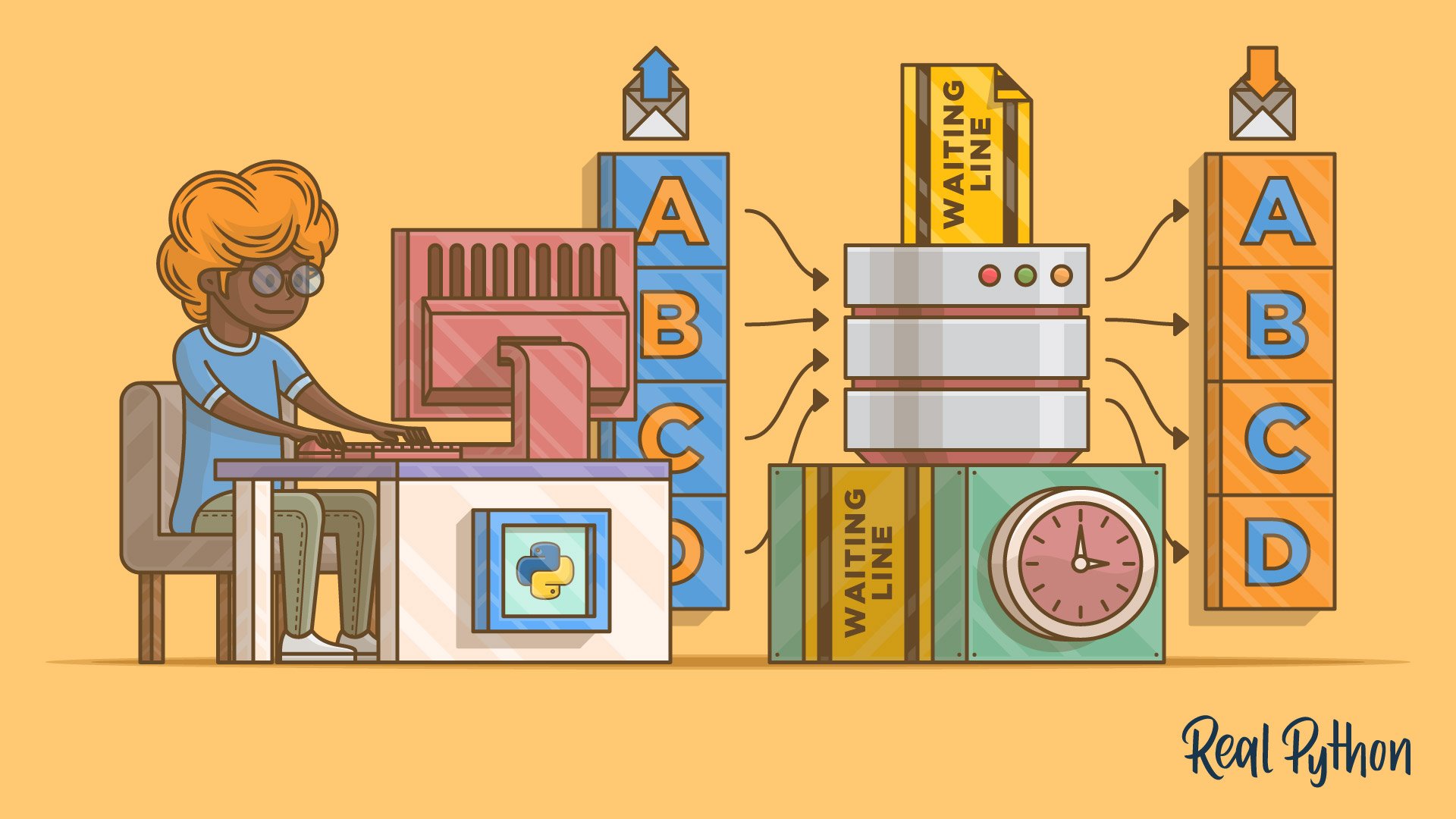
This tutorial will give you a firm grasp of Python’s approach to async IO, which is a concurrent programming design that has received dedicated support in Python, evolving rapidly from Python 3.4 through 3.7 (and probably beyond).

In the second part of our series we will take a look at more advanced concurrency models such as Actors, Communicating Sequential Processes, Software Transactional Memory and of course Guilds – a new concurrency model which may be implemented in Ruby 3.
