3 Reasons You’re Bad at Recognizing What You're Good At, According to a Psychology Professor

Psychologists say criticism, anxiety and the wrong environment can make it harder to recognize the strengths you already have.
Psychologists say criticism, anxiety and the wrong environment can make it harder to recognize the strengths you already have.

Why We Think We Know More Than We Do: Breaking down the famous “Dunning-Kruger effect” with David Dunning himself
Those in the bottom quartile of performance wildly overestimated their skill in that domain
top quartile often underestimated their relative skill (though to a lesser extent).
The business world has long had special jargon for the Kafkaesque incompetence bedeviling the ranks of upper management. There is “the Peter principle,” first described in a satirical book of the same name in 1968.

Incompetent people tend to see themselves as not just competent, but highly competent. So, at any rate, holds the theory of the 'Dunning-Kruger effect,' previously featured here on Open Culture. But does the converse also hold: do highly competent people tend to see themselves…
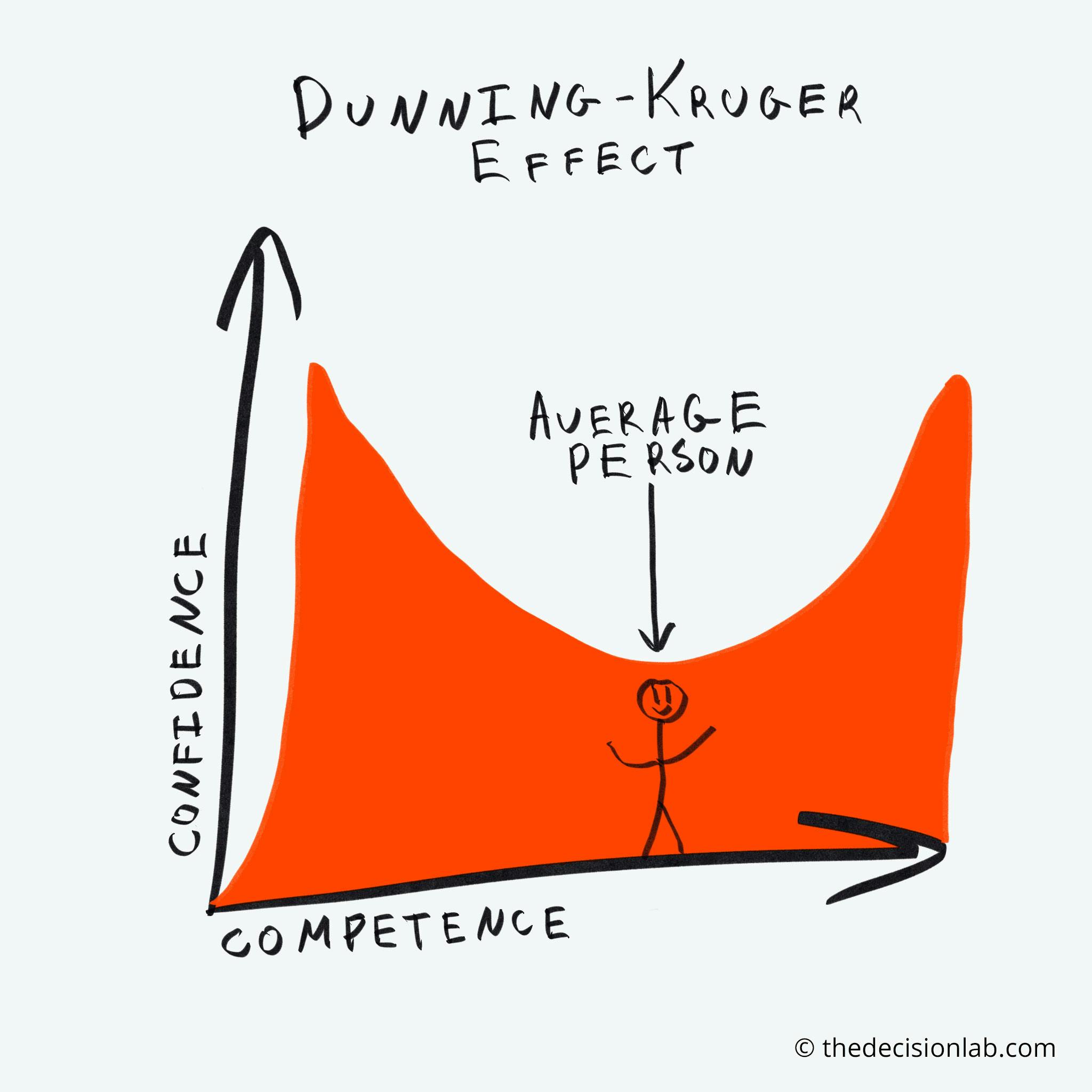
Dunning–Kruger Effect explains why the least competent at a task often incorrectly rate themselves as high-performers because they do not know otherwise.

The Dunning-Kruger effect can be observed during talent shows like American Idol. The auditions are usually filled with a variety of good and bad singers. The ones who are bad at it, almost never realize how bad they really are. Low ability people do not possess the skills…

Bonhoeffer's "theory of stupidity" posits that we have more to fear from stupidity than evil. The latter is easier to defeat than the former.