How to Train Your Robot
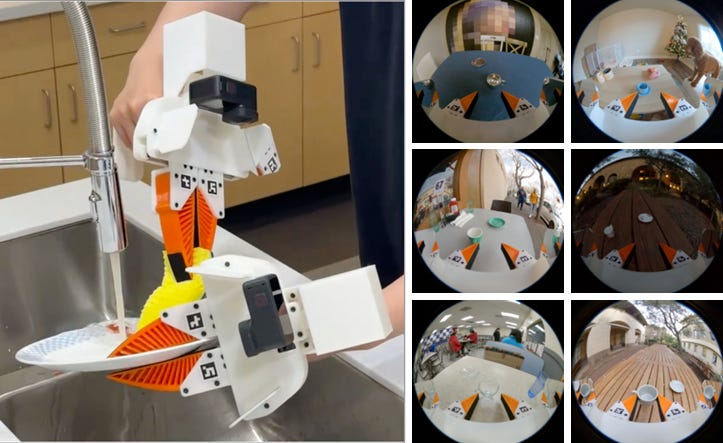
The enormous advance in AI capabilities over the last several years has in large part been driven by the availability of vast amounts of training data.
The enormous advance in AI capabilities over the last several years has in large part been driven by the availability of vast amounts of training data.

Today’s tidal wave of queries is forcing hardware makers to pivot
Note: ### The AI Inference Revolution Is Here [IEEE Spectrum article](#rid:1854764141) — a survey of how the shift from AI training to AI **inference** is reshaping chip and memory design. **The shift** Since 2020, the AI story was about training ever-bigger models. In 2026 the spotlight has moved to inference — putting trained models to work. People actually use LLMs now, reasoning models run…

AI computer tool use is a big deal.

Discover how Geometric Deep Learning and Graph Neural Networks power Simcenter PhysicsAI to cut CFD & FEA simulation time from days to seconds.
Freed from intelligibility and aesthetics, AI designs faster

A University of Chicago study changed how I think about AI and information edges. Then a second paper on AI made it worse.

CUDA (Compute Unified Device Architecture) provides a powerful parallel programming model AI engineers can use to tap the massive processing power of NVIDIA GPUs. CUDA delivers direct control, debugging power, and acceleration at the GPU level that can’t be matched by other…
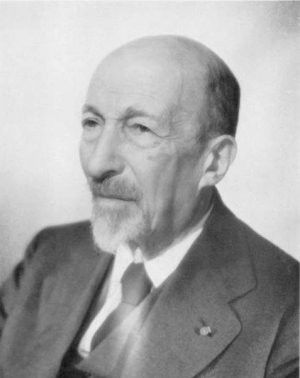
The thing that makes 4-bit AI work is a grid of nothing but +1s and -1s called a Hadamard matrix. Here's how a 159 year old matrix ended up rescuing modern AI model performance: In 1867 James Joseph Sylvester was studying how to color tiles. He found you could build square grids…
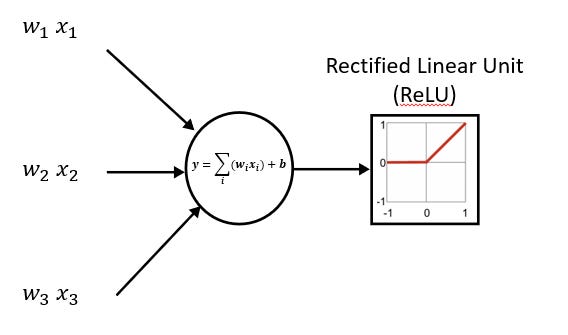
Learning from a classic AI accelerator - Eyeriss
Sparse computing enables leaner, faster AI
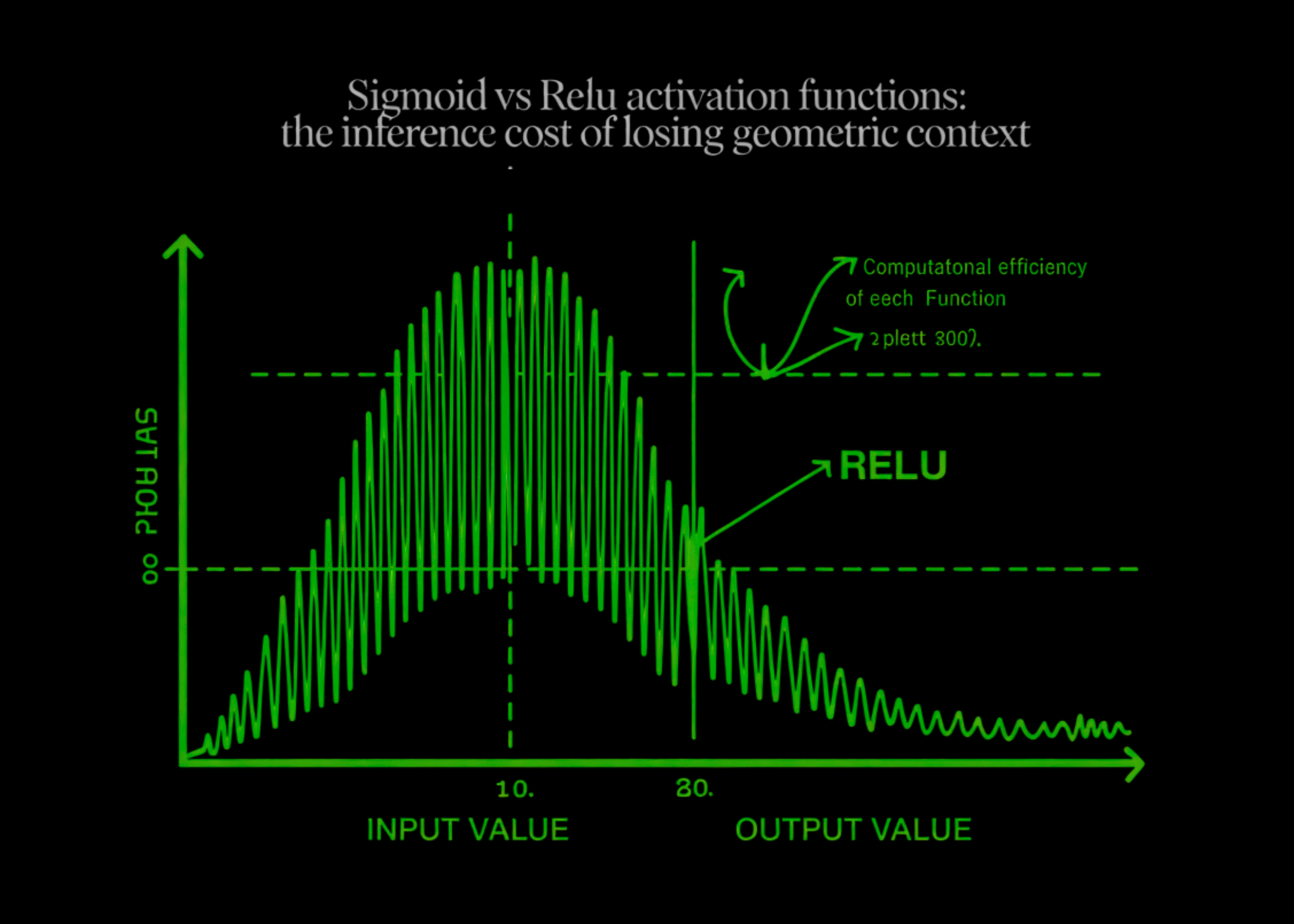
Explore Sigmoid vs ReLU activation functions and how losing geometric context affects neural network efficiency and depth.

A new technical paper titled “Advances in You Only Look Once (YOLO) algorithms for lane and object detection in autonomous vehicles” was published by RMIT University, Kyungpook National University, Deakin University and the RCA Robotics Laboratory, Royal College of Art. Abstract…

The last decade has witnessed an experimental revolution in data science and machine learning, epitomised by deep learning methods. Indeed, many high-dimensional learning tasks previously thought to be beyond reach -- such as computer vision, playing Go, or protein folding…
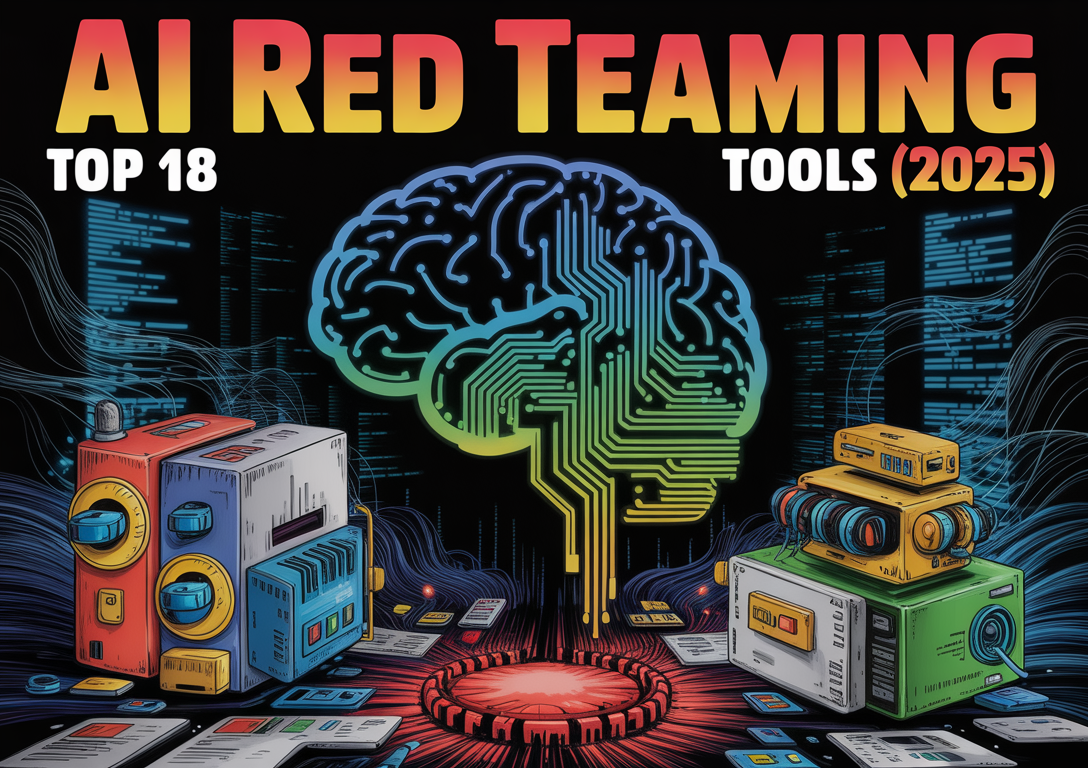
Discover top AI red teaming tools for robust AI security. Learn how adversarial testing protects machine learning models
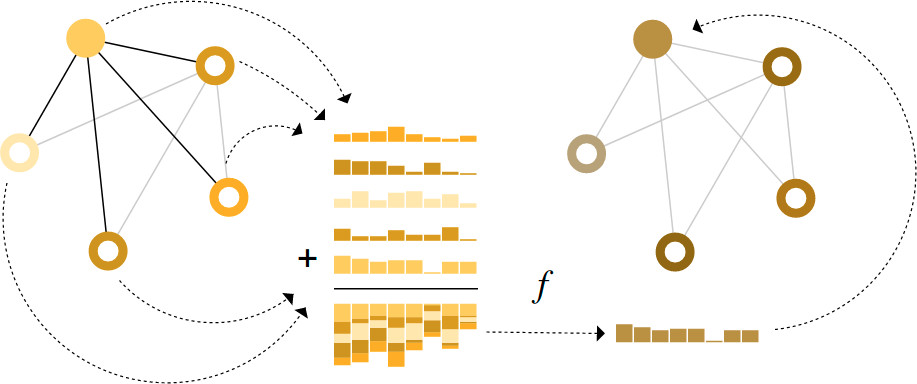
What components are needed for building learning algorithms that leverage the structure and properties of graphs?

BERT is an open source machine learning framework for natural language processing (NLP) that helps computers understand ambiguous language by using context

The latest effort, from the Mayo Clinic, holds some clues.

AI art generation has entered an era of evolution over revolution

We picked 50 paper/models/blogs across 10 fields in AI Eng: LLMs, Benchmarks, Prompting, RAG, Agents, CodeGen, Vision, Voice, Diffusion, Finetuning. If you're starting from scratch, start here.
Note: gist: https://gist.github.com/bjpcjp/117ecf144c062c3c933f2690e7ece5c2

Musings on systems, information, learning, and optimization.
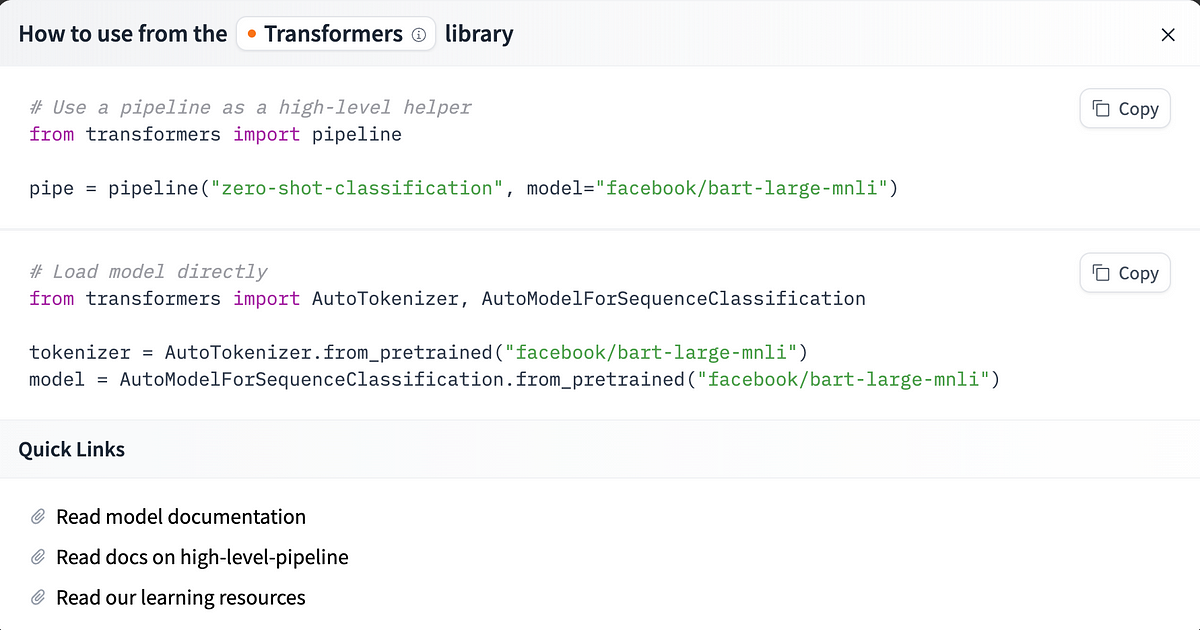
Pulling pre-trained models out of the box for your use case

[caption align=
Aman's AI Journal | Course notes and learning material for Artificial Intelligence and Deep Learning Stanford classes.
Note: CNNs (5 items) RNNs (10 items) Transformers (3 items) Info theory (5 items) Other (4 items)

How AI Could Transform the World for the Better

Where can you find projects dealing with advanced ML topics? GitHub is a perfect source with its many repositories. I’ve selected ten to talk about in this article.
Deep learning is crucial in today's age as it powers advancements in artificial intelligence, enabling applications like image and speech recognition, language translation, and autonomous vehicles. Understanding deep learning equips individuals to harness its potential, driving…

Multi-layer perceptrons (MLPs), or fully-connected feedforward neural networks, are fundamental in deep learning, serving as default models for approximating nonlinear functions. Despite their importance affirmed by the universal approximation theorem, they possess drawbacks. In…

Deep learning architectures have revolutionized the field of artificial intelligence, offering innovative solutions for complex problems across various domains, including computer vision, natural language processing, speech recognition, and generative models. This article…

Is Attention all you need? Mamba, a novel AI model based on State Space Models (SSMs), emerges as a formidable alternative to the widely used Transformer models, addressing their inefficiency in processing long sequences.
Graph representation learning aims to effectively encode high-dimensional sparse graph-structured data into low-dimensional dense vectors, which is a fundamental task that has been widely studied...
This projects contains different conformal methods and approaches. Includes code generated for a experimental evaluation of a multidimensional, low-sample size biomedical dataset of oncological sub...
Why is Adam the most popular optimizer in Deep Learning? Let's understand it by diving into...
[Special thank you to Ian Kivlichan for many useful pointers (E.g. the 100+ year old Nature paper “Vox populi”) and nice feedback. 🙏 ] High-quality data is the fuel for modern data deep learning model training. Most of the task-specific labeled data comes from human annotation…

TV is just as interesting to AI as it is to humans.

Understanding how convolutional neural networks (CNNs) operate is essential in deep learning. However, implementing these networks, especially convolutions and gradient calculations, can be challenging. Many popular frameworks like TensorFlow and PyTorch exist, but their complex…
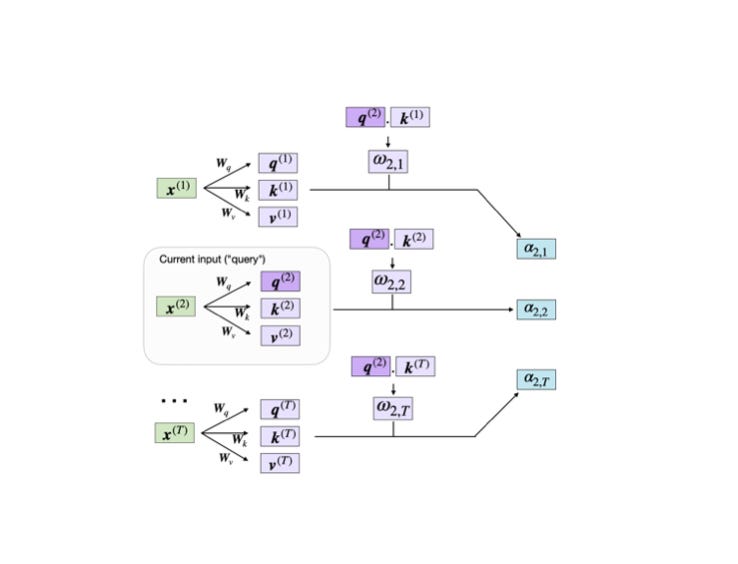
This article will teach you about self-attention mechanisms used in transformer architectures and large language models (LLMs) such as GPT-4 and Llama.

Theory and PyTorch Implementation
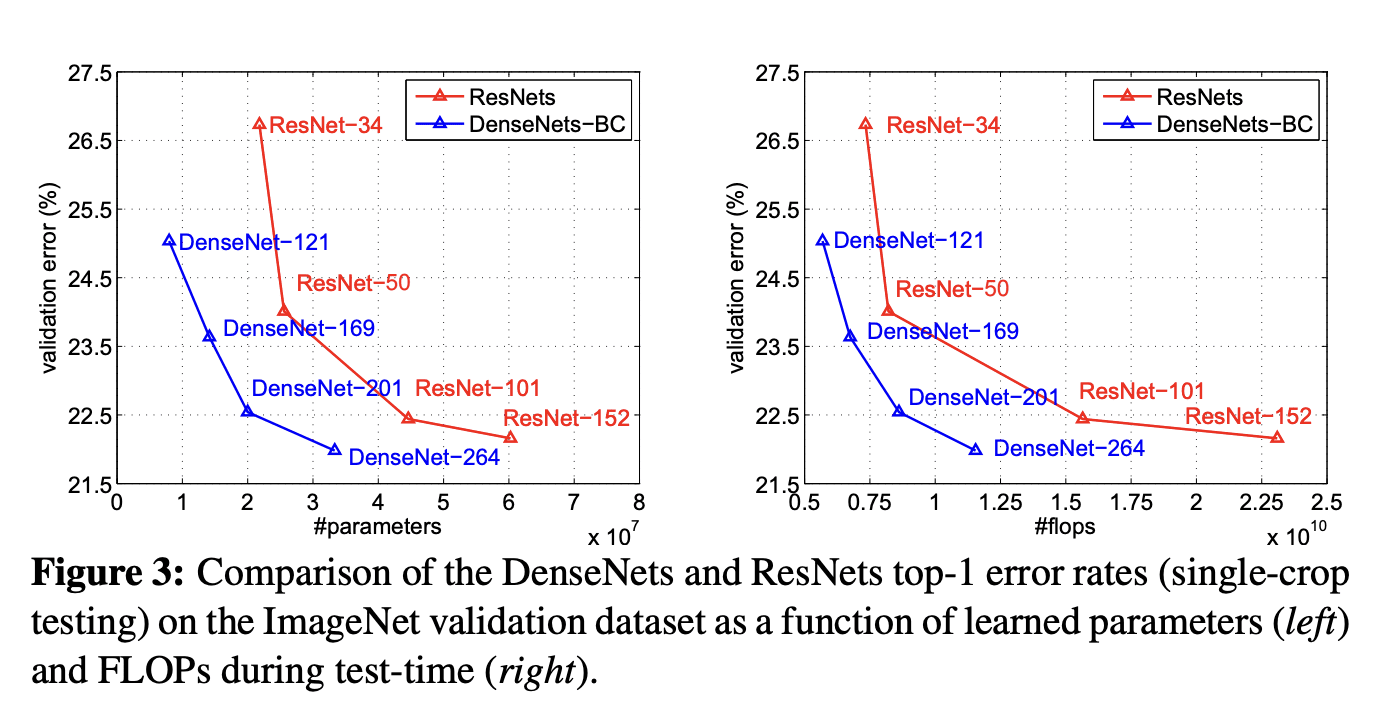
In this article we will learn about its definition, differences and how to calculate FLOPs and MACs using Python packages.
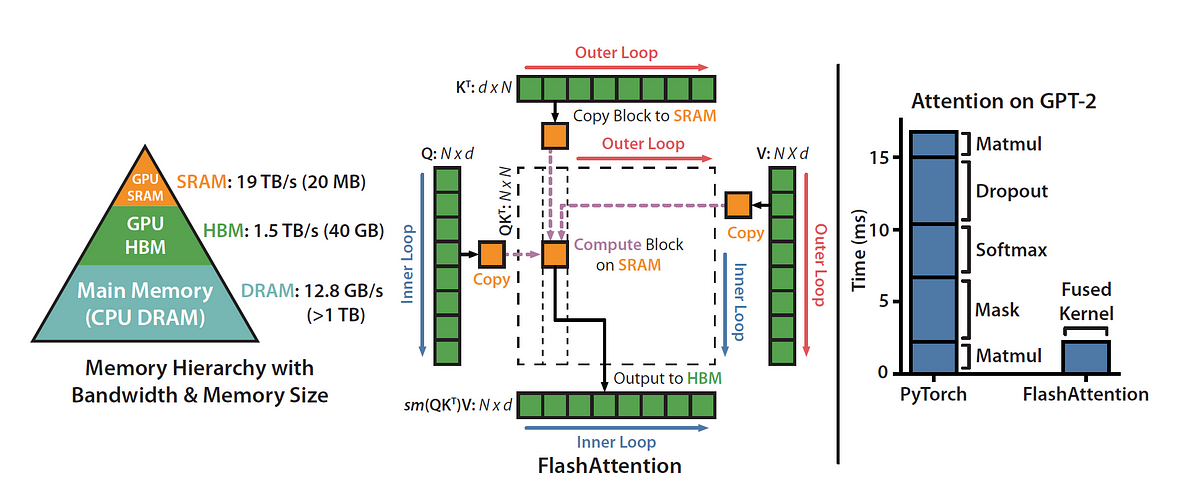
Step by step explanation of how one of the most important MLSys breakthroughs work — in gory detail.

A beginner's guide to understanding autonomous AI agents and their importance.

GPUs may dominate, but CPUs could be perfect for smaller AI models

Stanford team achieves first-ever optical backpropagation milestone
Language is essentially a complex, intricate system of human expressions governed by grammatical rules. It poses a significant challenge to develop capable AI algorithms for comprehending and...

Explore what LLMs are, how they work, and gain insights into real-world examples, use cases, and best practices.

One of the creators of the famous BLIP-2 model shares his insights about the current state of multimodal generative AI.

If you're looking for a way to improve the performance of your large language model (LLM) application while reducing costs, consider utilizing a semantic cache to store LLM responses.

AI-generated images have never been more popular, and Midjourney is one of the best tools. Here's how to access the AI and what to know about using it.