LLM Projects with Python

In this article, I'll take you through a list of 10 hands-on LLM projects with Python you should try to master LLMs. LLM Projects with Python.
In this article, I'll take you through a list of 10 hands-on LLM projects with Python you should try to master LLMs. LLM Projects with Python.
MiMo: Unlocking the Reasoning Potential of Language Model – From Pretraining to Posttraining - XiaomiMiMo/MiMo

Measuring progress is fundamental to the advancement of any scientific field. As benchmarks play an increasingly central role, they also grow more susceptible to distortion. Chatbot Arena has emerged as the go-to leaderboard for ranking the most capable AI systems. Yet, in this…

Here are my top 12 MCP Servers I used and tested so far: - Python Code Interpreter: Runs Python code in a sandbox using Pyodide and Deno for isolation. https://lnkd.in/eYmexFA2 - Web fetcher: Fetches web page content using Playwright headless browser with JavaScript support…

DeepSeek is set to drop another model pretty soon, as details about their next DeepSeek R2 model have surfaced on the internet


Enhance language models with real-time document retrieval and dynamic knowledge integration using retrieval-augmented generation and LlamaIndex.

A blog post covering tips and tricks that have proven effective for using Claude Code across various codebases, languages, and environments.

We insist that large language models repeatedly translate their mathematical processes into words. There may be a better way.
This reliance on filtering concepts through the sieve of language can also result in a loss of information
deep neural networks that allow language models to continue thinking in mathematical spaces before producing any text.
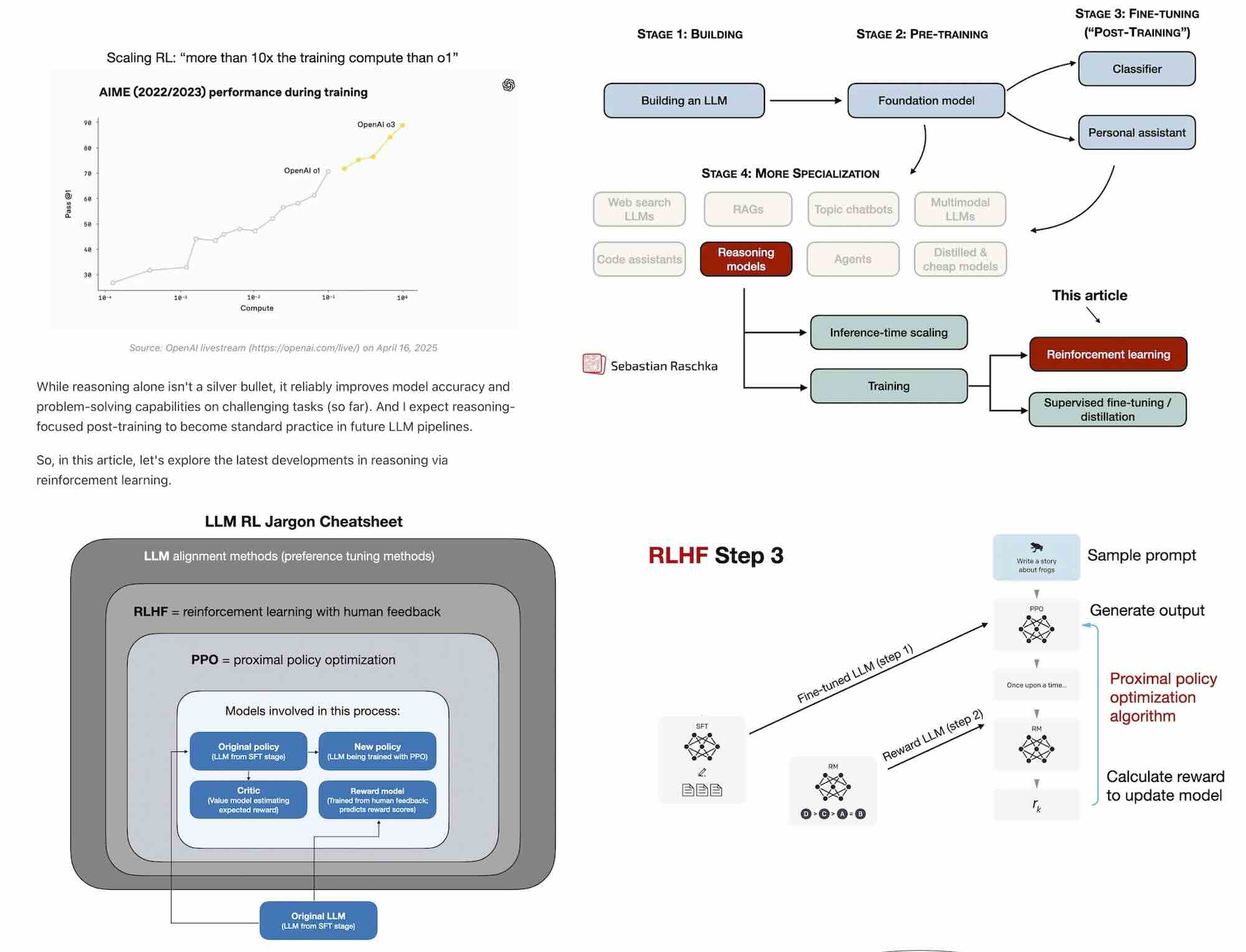
A lot has happened this month, especially with the releases of new flagship models like GPT-4.5 and Llama 4. But you might have noticed that reactions to these releases were relatively muted. Why? One reason could be that GPT-4.5 and Llama 4 remain conventional models, which…

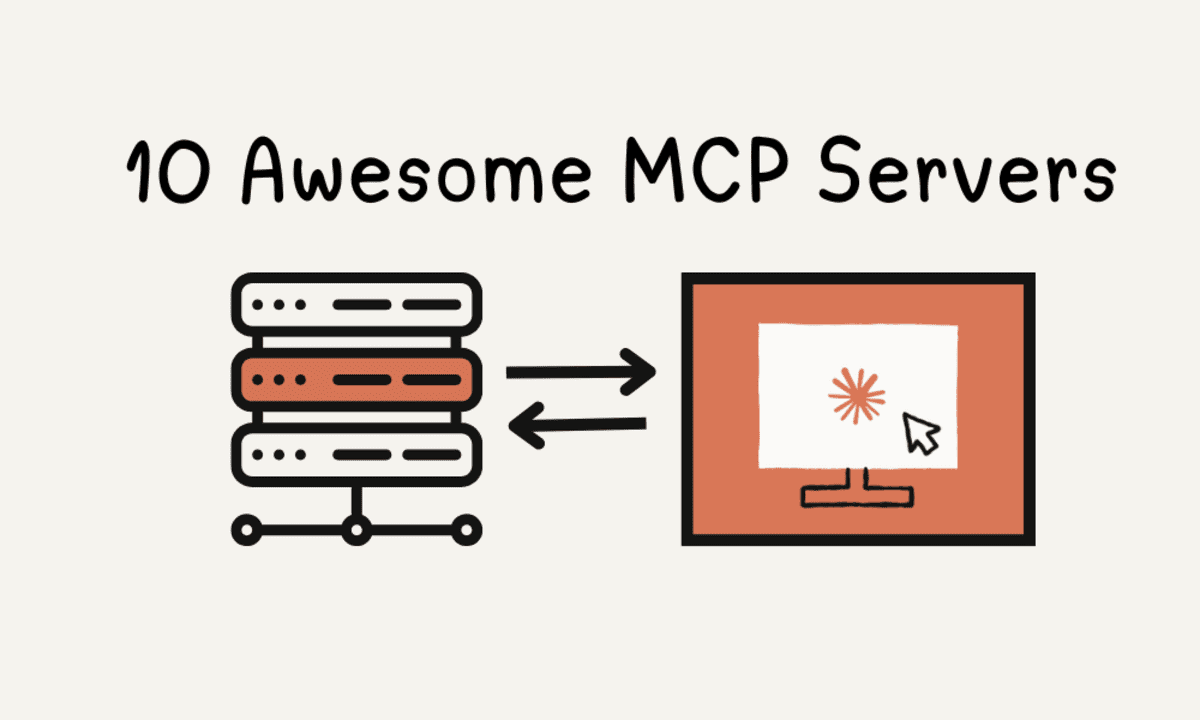
Try these MCP servers with Claude Desktop today for free.


Building a fully functional, code-editing agent in less than 400 lines.
What are the principles we can use to build LLM-powered software that is actually good enough to put in the hands of production customers? - humanlayer/12-factor-agents
Slopsquatting is a new supply chain threat where AI-assisted code generators recommend hallucinated packages that attackers register and weaponize.

0 comments
Doug Turnbull recently wrote about how [all search is structured now](https://softwaredoug.com/blog/2025/04/02/all-search-structured-now): Many times, even a small open source LLM will be able to turn a search query into reasonable …
As it turns out, OpenAI’s rate limits are a little more complicated than other APIs.

François Chollet has constructed the ultimate test for the bots.
MCP, short for Model Context Protocol, is the hot new standard behind how Large Language Models (LLMs) like Claude, GPT, or Cursor integrate with tools and data. It’s been described as the “USB-C for…

we explore how combining LightThinker and Multi-Head Latent Attention cuts memory and boosts performance
A Blog post by Ksenia Se on Hugging Face
four advanced attention mechanisms which improve how models handle long sequences, cut memory use and make attention learnable
Self-Attention which lets each token “look” at all others

By Matteo Wong / The Atlantic. View the full context on Techmeme.

We’re introducing Llama 4 Scout and Llama 4 Maverick, the first open-weight natively multimodal models with unprecedented context support and our first built using a mixture-of-experts (MoE) architecture.
Overview of the Model Context Protocol (MCP) how it works, what are MCP servers and clients, and how to use it.
Agent Framework / shim to use Pydantic with LLMs
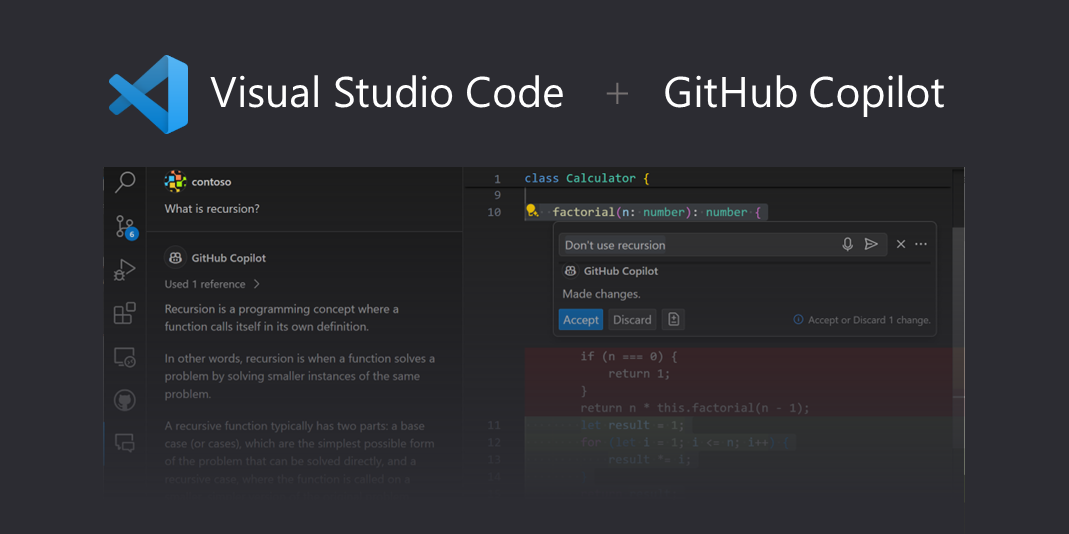
Learn how to configure and use Model Context Protocol (MCP) servers with GitHub Copilot in Visual Studio Code.
Explore this post and more from the Jupyter community
The brother goes on vision quests. The sister is a former English major. Together, they defected from OpenAI, started Anthropic, and built (they say) AI’s most upstanding citizen, Claude.

Posted by mehul_gupta1997 - 8 votes and 0 comments

The past few years have witnessed the rise in popularity of generative AI and large language models (LLMs), as part of a broad AI revolution.

Deploying LLMs presents challenges, particularly in optimizing efficiency, managing computational costs, and ensuring high-quality performance. LLM routing has emerged as a strategic solution to these challenges, enabling intelligent task allocation to the most suitable models…
A collection of MCP servers
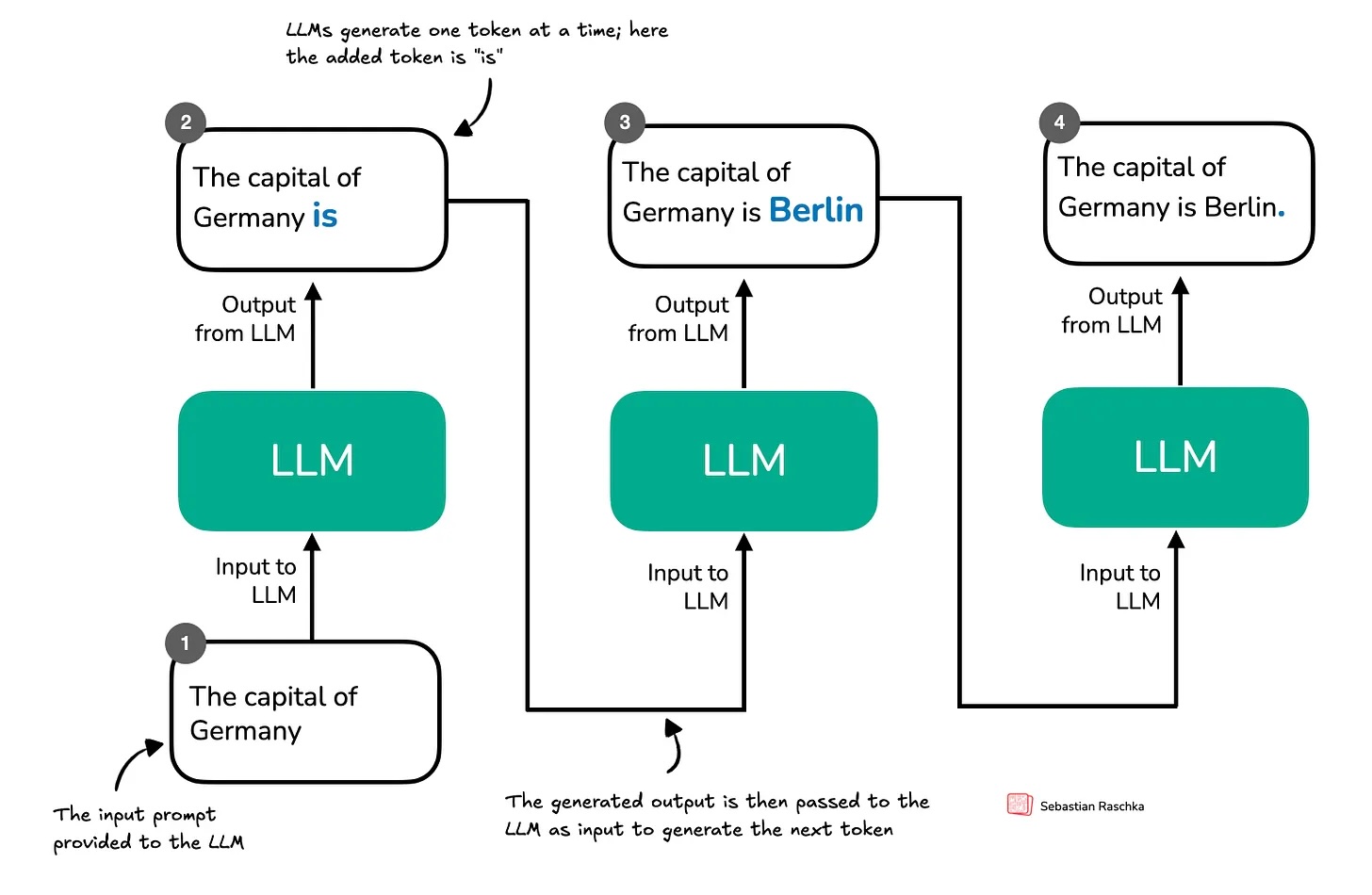
As you know, I've been writing a lot lately about the latest research on reasoning in LLMs. Before my next research-focused blog post, I wanted to offer something special to my paid subscribers as a thank-you for your ongoing support. So, I've started writing a new book on how…

Thanks to KiwiCo for sponsoring today’s video! Go to https://www.kiwico.com/welchlabs and use code WELCHLABS for 50% off your first monthly club crate or for...
Q-learning is a model-free reinforcement learning algorithm that enables agents to learn optimal actions through interaction with their environment.
In a follow-up to the research that brought us the [delightful Golden Gate Claude](https://simonwillison.net/2024/May/24/golden-gate-claude/) last year, Anthropic have published two new papers about LLM interpretability: - [Circuit Tracing: Revealing Computational …

What they found challenges some basic assumptions about how this technology really works.
In this article, we explore 10 of the Python libraries every developer should know in 2025.
Google's Gemma 3 model (the 27B variant is particularly capable, I've been trying it out [via Ollama](https://ollama.com/library/gemma3)) supports function calling exclusively through prompt engineering. The official documentation describes two recommended …
There’s a new release from Google Gemini this morning: the first in the Gemini 2.5 series. Google call it “a thinking model, designed to tackle increasingly complex problems”. It’s already …

At OpenAI, we have long believed image generation should be a primary capability of our language models. That’s why we’ve built our most advanced image generator yet into GPT‑4o. The result—image generation that is not only beautiful, but useful.

The Hallucination Index is a benchmark that measures the frequency of inaccuracies in large language models, indicating their reliability and contextual understanding.

[platform_url]//console.mistral.ai/

Model architectures, data generation, training paradigms, and unified frameworks inspired by LLMs.

Anthropic launches real-time web search for Claude AI, challenging ChatGPT's dominance while securing $3.5 billion in funding at a $61.5 billion valuation.