The most important product decision is what you don’t build

Ask a team what they shipped this year and you’ll get a list. Ask what they killed and the room goes quiet.
Ask a team what they shipped this year and you’ll get a list. Ask what they killed and the room goes quiet.

An MIT team proved that it is impossible to get information about correlations from two-way comparisons alone. Correlations can be discerned, however, when large numbers of people rate three alternatives in their order of preference.

Decision Theory is the study of principles and algorithms for making correct decisions—that is, decisions that allow an agent to achieve better outcomes with respect to its goals. Every action at least implicitly represents a decision under uncertainty: in a state of partial…
In our increasingly digitized world, design is no longer just about beauty and usability — it’s about responsibility. Every checkbox ticked by default, every pre-selected plan, and every silent subscription carries a weight that goes beyond UI — it reflects the ethical stance of…

Here’s how a mathematical paradox distorts our view of news, safety and statistics
Welsh police learned this lesson the hard way during the 2017 Union of European Football Associations Champions League final. They deployed cameras throughout Cardiff, where the soccer event was held, and used automated facial-recognition software to analyze the footage. The software scanned the…

Learning about something in public, even if everyone already knows it, can change everything—especially when and how we decide to help.

Master the art of decision-making with insights from control engineering. Learn how mental models can guide you through uncertainty.

"if there is one skill that stands out, it’s the ability to focus and make the best move when there are no good moves."

New discoveries about the human mind show the limitations of reason.

For years, I practised medicine with cool certainty, comfortable with life-and-death decisions. Then, one day, I couldn’t

Binstack is a technique for selecting the "single most impactful" solution when there are multiple, incomparable dimensions to evaluate.

Your life choices aren’t just about what you want to do; they’re about who you want to be.

The need for a sound decision-making approach in the face of uncertainty is greater now than ever before.

More than ever, diners need actual descriptions of what they’re eating
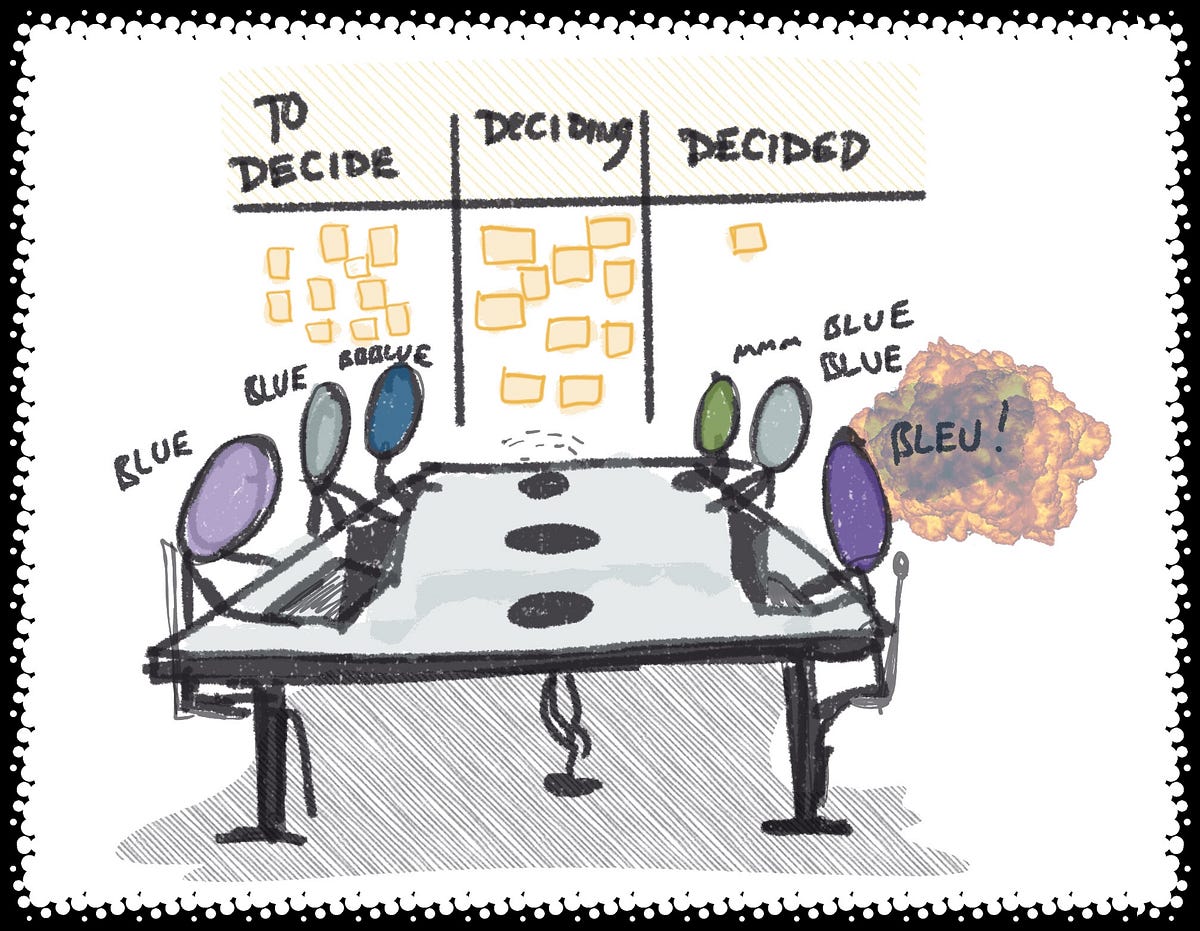
Note: With the arrival of my son, I’m slowing down on the blogging. Give me a couple months (or more sleepless nights), and I’ll be back…

Have you ever stopped to think about just how many decisions you make each and every day? Some choices are very simple, such as choosing to get up in the
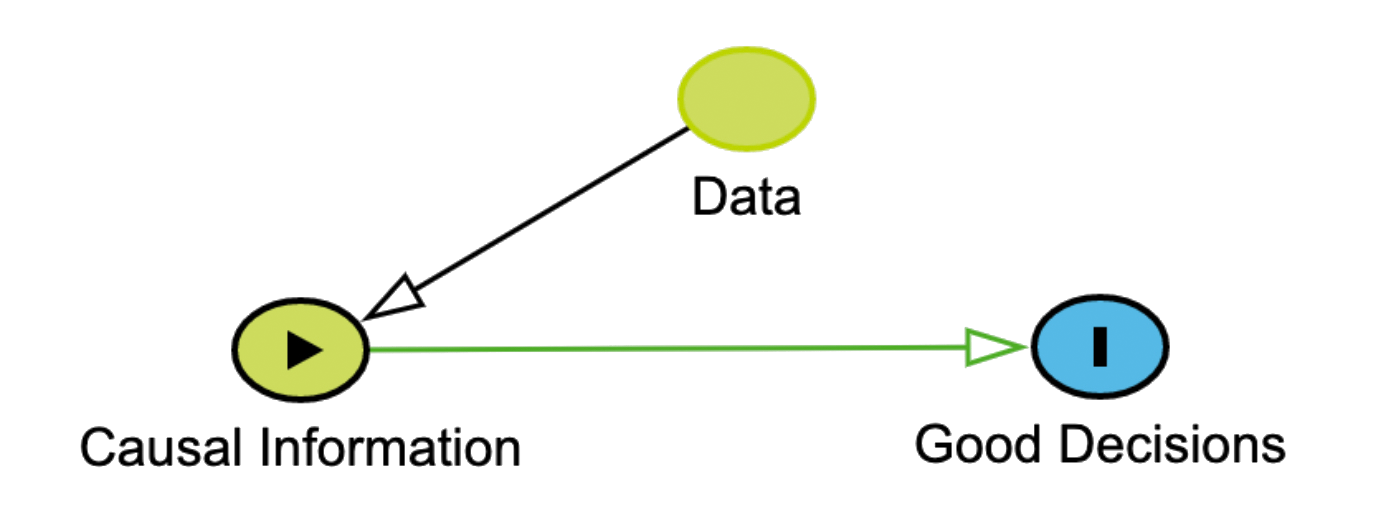
In some organizations, earnest efforts to be “data-driven” devolve into a culture of false certainty in which the influence of metrics is dictated not by the...

Psychological biases can make it difficult to get out of an ailing business.
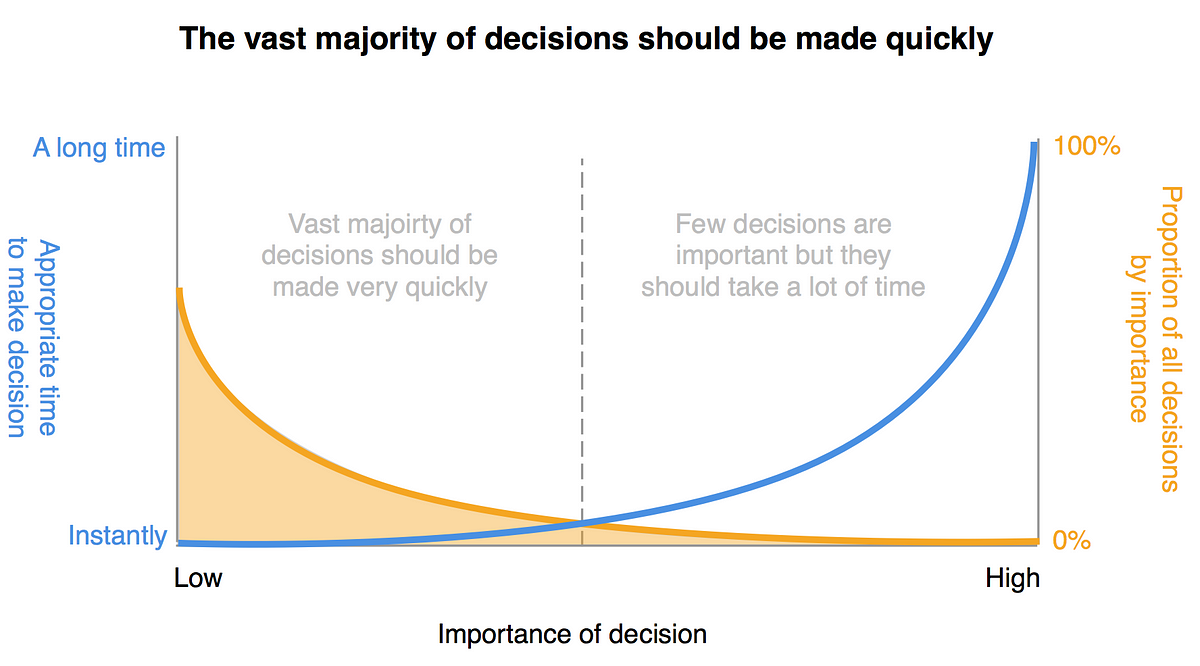
While product managers may not build the actual product, they do produce something very tangible for a team: decisions.

Gokul Rajaram shares a framework that he's used at Square and Caviar to make the most difficult decisions, all while assigning ownership, being inclusive and coordinating execution among all stakeholders.

Product managers have to make many decisions every day, including product prioritization decisions, product design decisions, bug triage decisions, and many more. And the process by which a product

Or, How to Decide with Incomplete Data
How to productively make collaborative decisions

Is the American obsession with individual freedom really such a great idea? What other cultures know about how to make good choices.
Leadership Now is a leading source for leadership development and analysis. We believe that anyone can make a difference by leading from where they are.
Seymour Schulich offers a meaningful improvement to the simple pro-and-con list that many of us have used to make decisions.

How much information do you need to make up your mind? Our research in various domains of decision making shows that we make decisions more quickly and based on less information than we think. This has important implications in an age in which information is plentiful.

Learning to make smart decisions helps you get better results. This guide is packed with time-tested real world tools you can use today.

Irrationality may be a consequence of the brain’s ravenous energy needs.

The 37% rule states that when making any major decision in life, reject the first 37% in a list and choose the next best that comes along.

Familiarity has a major impact on our decision-making process. Understanding the psychology behind it will lead to better UX / design, copy and CTAs.
:extract_focal()/https%3A%2F%2Fwww.stylist.co.uk%2Fimages%2Fapp%2Fuploads%2F2020%2F06%2F20102719%2Fhow-to-make-decisions-crop-1592645276-1680x1120.jpg%3Fw%3D1200%26h%3D1%26fit%3Dmax%26auto%3Dformat%252Ccompress)
Terrible at making decisions? A 2020 study reveals just how much our expectations drop while taking the time to decide on something.

Use this framework to put decision-making theory into practice

“It was better before,” says your friend. “Ha, those were the days,” your reply with a sigh. Declinism is the belief that societies tend towards decline, often linked with rosy retrospection—our tendency to view the past more favourably and the future more negatively. It may…

Most innovation managers know that few of their initiatives will succeed, so they keep multiple projects running at the same time and create processes for quickly separating winners from losers. One popular way to make decisions about what stays and what goes is the use of stage…

The OODA Loop is a four-step process for making effective decisions in high-stakes situations. It involves collecting relevant information, recognizing potential biases, deciding, and acting, then repeating the process with new information. Read on to learn how to use the OODA…

Five ways to do noise reduction, from the field of judgment and decision making.

Results from the BIN paper, or why reducing noise in your decision making is far easier than fighting your cognitive biases.

Product teams often know that a project needs to change direction, but they don’t have a way to make that change safely and quickly. Survival metrics empower them to do just that.
When we find ourselves in endless debates where everyone defends their idea, we don't know how to handle the situation. We eventually find a way out, but what we need is an excellent system.

In a world of asynchronous communication, it’s more important than ever to create inclusive and remote-friendly collaboration, decision-making, alignment, a...

Editor’s note: Welcome to another installment of our weekly War Books series! The premise is simple and straightforward. We ask an expert on a particular subject to recommend five books […]

Don't not do what you wanna do.
Decision tables are easy, simple, and powerful. You can teach them in five minutes and write one in half that time. You can look at a table and understand what it’s saying, see if it matches your problem, and check for design flaws. So it’s kinda weird that there’s basically…

MDP in action: the next step toward solving real-life problems with RL and AI
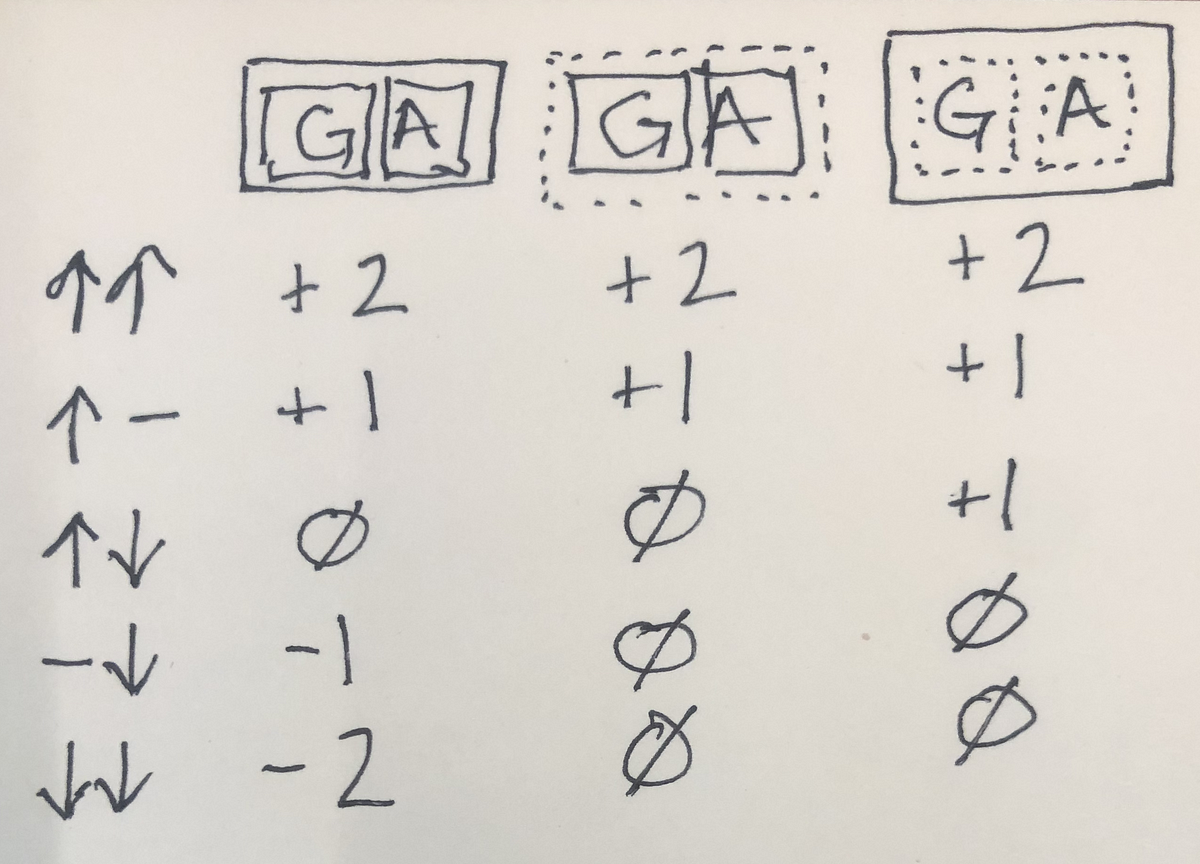
“Crazy. They believe that an option on a basket is better than a basket of options.” My interjection abruptly halted the executive…
Dr. Daniel Kahneman features on the latest Farnam Street podcast and it’s a surprising episode. Kahneman wrote Thinking Fast and Slow. I admire Kahneman a great deal. Not for his Nobel or for his work, which are both impressive, but for his humility. Some of the key tenets of…

Organizations are awash in data — from geocoded transactional data to real-time website traffic to semantic quantifications of corporate annual reports. All these data and data sources only add value if put to use. And that typically means that the data is incorporated into a…