How Do Cuttlefish Hide? Scientists Search for the Secret to Camouflage.

Cephalopods are masters of camouflage. Scientists want to decipher how the process works in the brain.
Cephalopods are masters of camouflage. Scientists want to decipher how the process works in the brain.

Why don’t great apes have knee problems?
Scientists want to create cells from scratch, to unveil life's origins or provide specialized functions. Are they close?
the question everyone is asking
Earth is overflowing with silicon. Carbon is comparatively scarce. Yet every living thing we have ever discovered is built around carbon, and the reason reaches from the sand beneath your feet to a st

A New York transplant surgeon’s experience waiting for a heart transplant laid bare the challenges of a system he had spent decades trying to fix.

Flies check in, but they don’t check out, thanks to liquid laced with stretchy sugars that keep them tangled up
Modern flu vaccines have an average efficacy of just 40 percent, and they must be revamped each year. How can we make vaccines that are “universal” — both broadly-protective and highly potent?
influenza evolves so quickly that a novel virus emerges each flu season
inactivate viruses with formaldehyde

Scientists have discovered a powerful gene-targeting system in viruses. Billions of years old, VIPR seems to predate CRISPR and may be even more powerful.
Finding a matched donor has always been the major challenge. A drug has solved that problem.
What if instead of editing a gene, or blocking the protein it produces, you could simply switch it off?

...
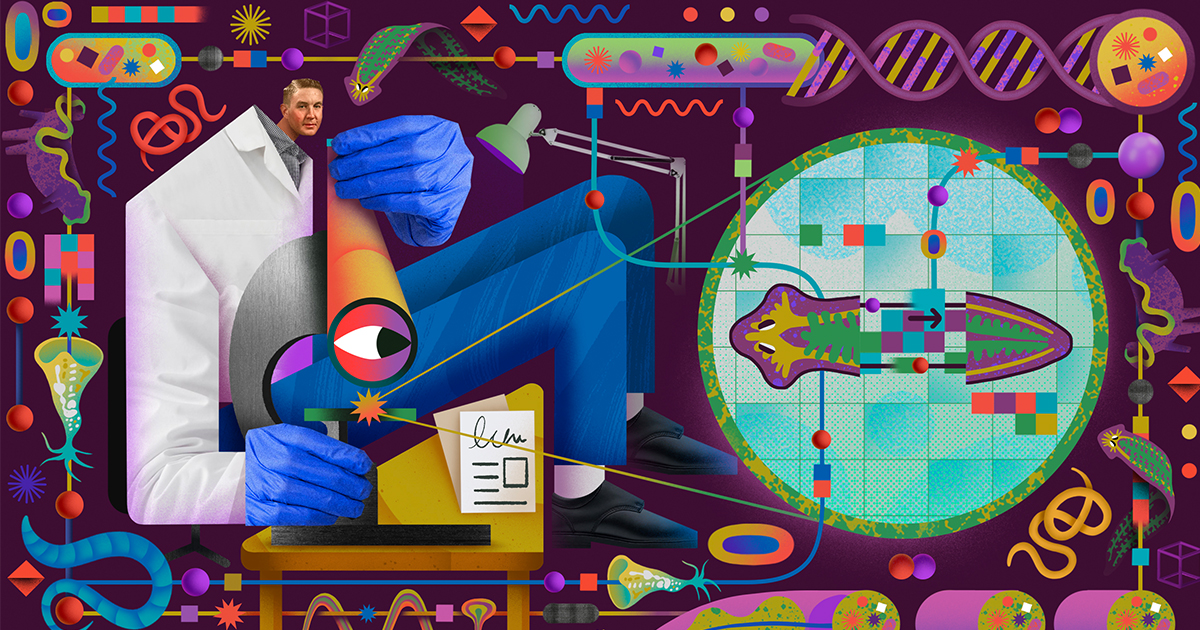
In the 1960s, worm-training experiments and their strange implications captivated the nation. Columnist Claire L. Evans follows the neuroscientists who attempted to recapture the magic.
In the 1960s, an eccentric behavioral psychologist named James McConnell convinced the scientific establishment that planarian worms, like Pavlov’s dogs, could be classically conditioned — and that memories of this training could be transferred from worm to worm through cannibalism. These bizarre…
The limits of breeding for speed
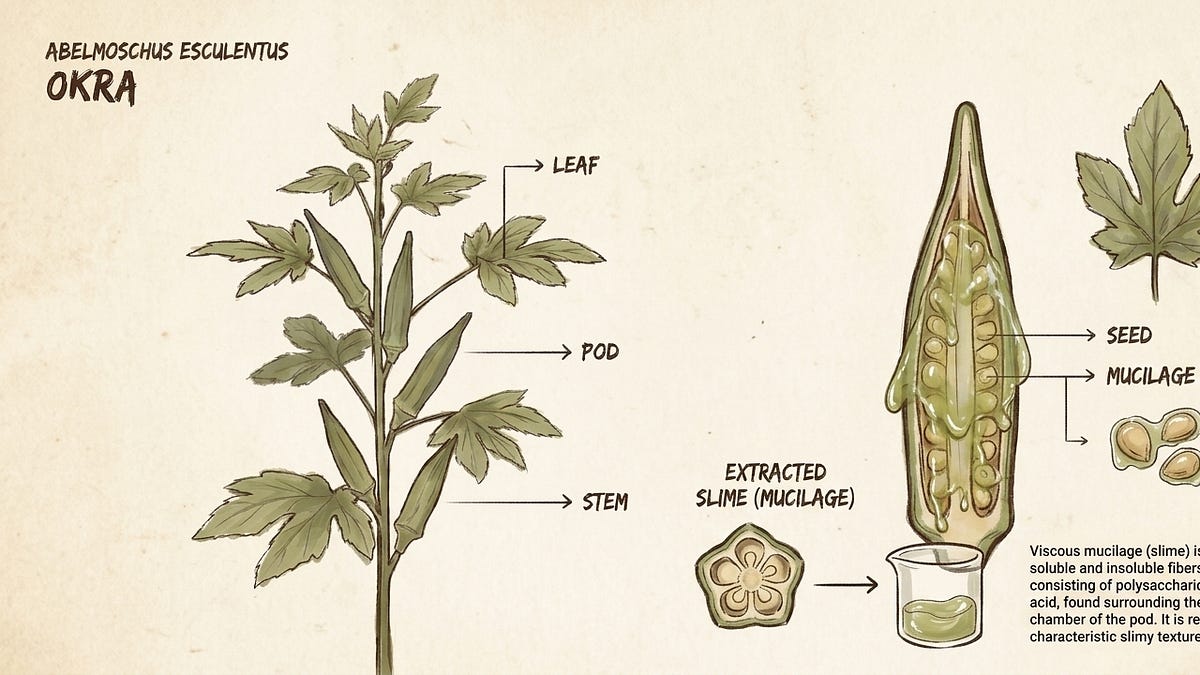
The slime inside okra is one of the most useful substances researchers have found in any plant on Earth.
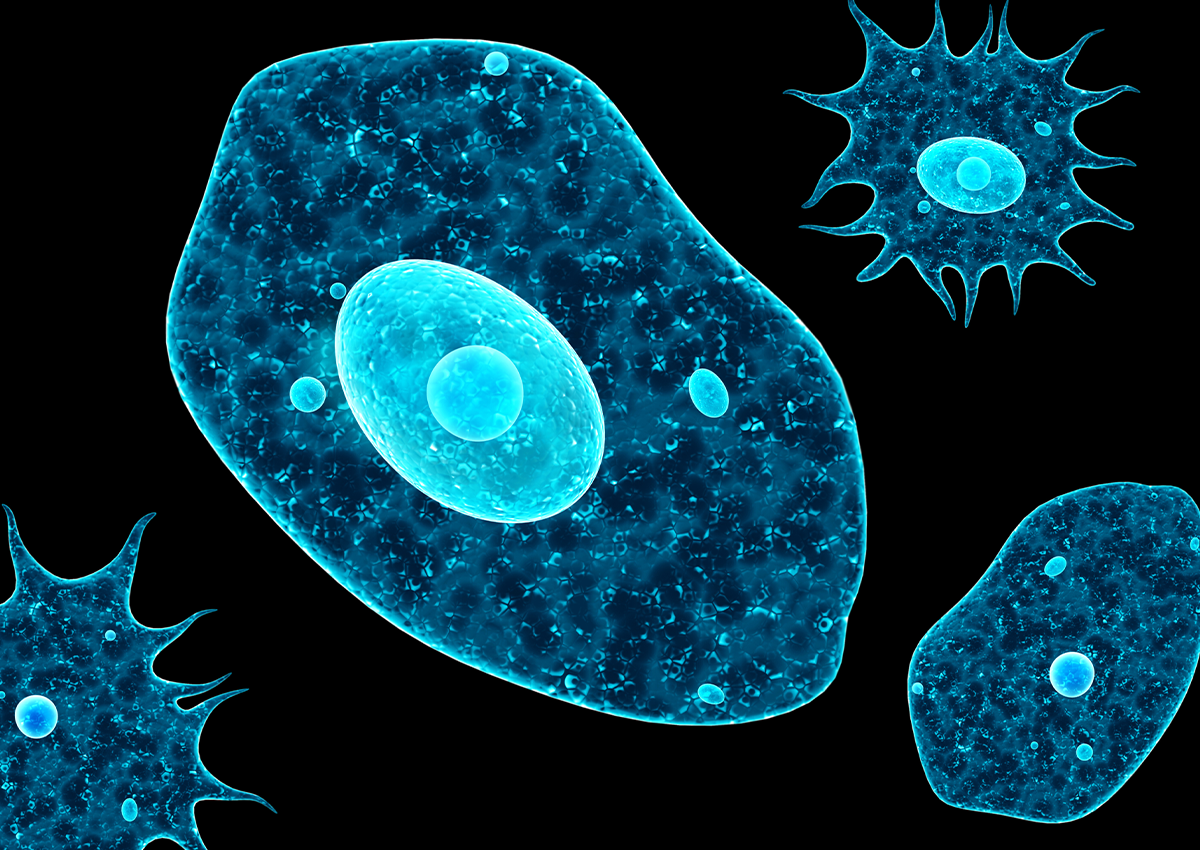
The Humble Amoeba Is Smarter Than You Think: A conversation with Nicholas Money, mycologist and author of A is for Amoeba
Biological phenomena are often studied by examining how a numerical variable, usually called the response (e.g., the weight or height of an organism), is affected by another variable, usually called the predictor (e.g., time or fertiliser applic...

For more than a decade, there's been something fishy going on in a lake that straddles Vermont and the province of Quebec. It involves cancer, a kind of catfish, and — possibly — clues about how tumors metastasize.

Is there a biochemical reason that extreme weather makes us happy?
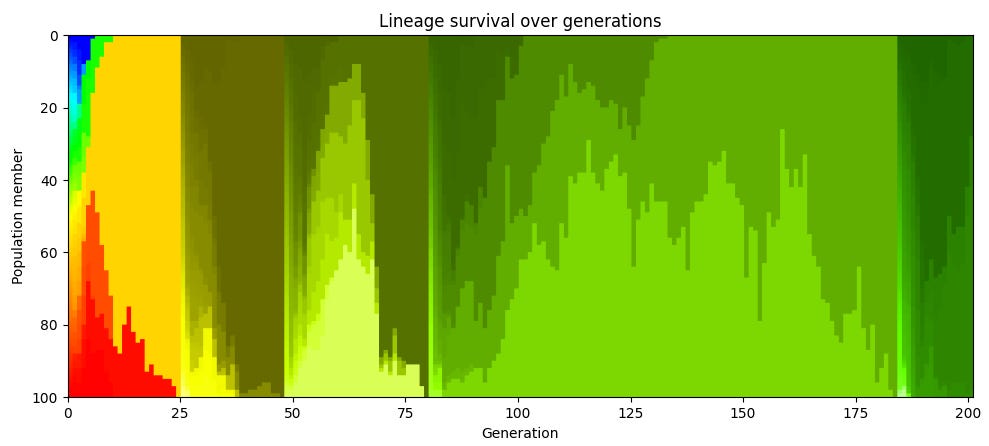
A few weeks ago we looked at a simulation of technological evolution by economist Brian Arthur, in which he was able to start with simple building blocks (such as a NAND gate) and evolve surprisingly complex circuits (such as a 12-way AND gate or a 4-bit adder) by randomly…
In the first episode of the new season of ‘The Joy of Why,’ Nobel Laureate Jennifer Doudna discusses how she discovered CRISPR’s genome-editing power, the breakthroughs and hurdles during its explosive growth, and what lies ahead for this groundbreaking technology.
Multiple myeloma is brutal. We may finally have a cure, but American regulatory inertia means that it was discovered abroad.
How resistance to growth hormone creates extraordinary disease resistance
In the 1940s, scientists made a discovery now fundamental to biology: genes are encoded in DNA. The story involves bacteria, dead mice, and a kitchen cream separator.

High‑quality 3D medical imaging data is the foundation of modern radiology AI, but access to it is often constrained by data scarcity, privacy restrictions…
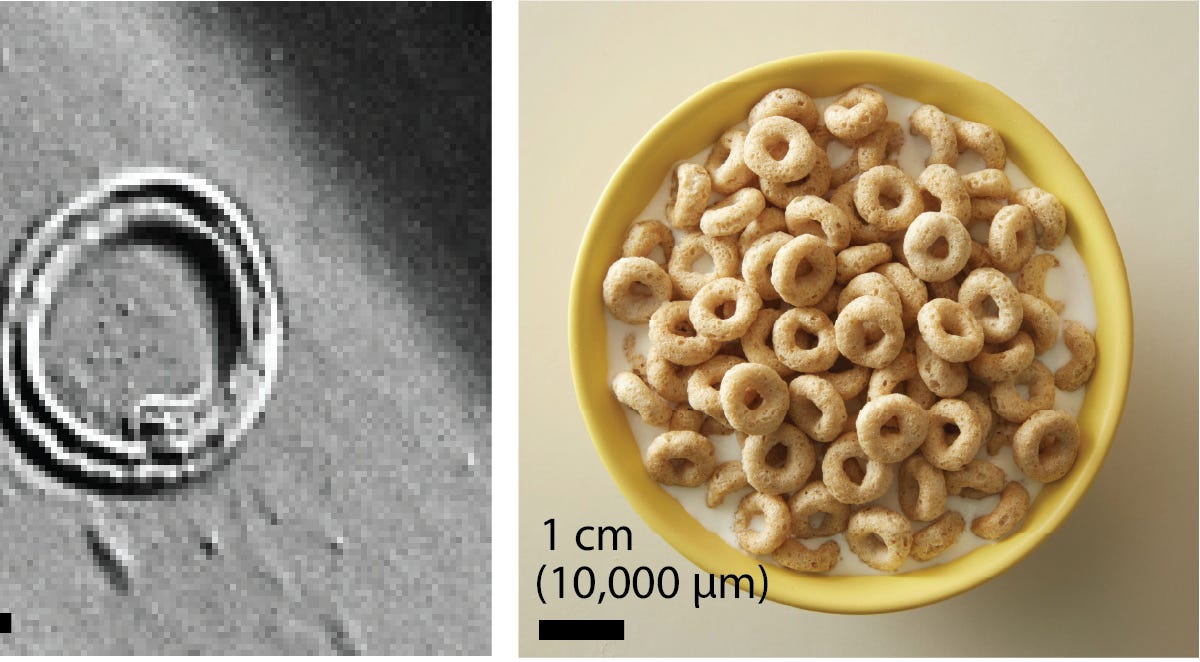
Sixty years later and we still can't solve it

Vaccines may be training a part of our immune system long thought to be untrainable.

Scientists working on synthetic “mirror life” have come to realize that, if created, it could pose an existential threat to life on Earth.
Mirror life would be the genesis of an organism that does not imitate nature but contradicts it. It would have a molecular structure opposite to that of all existing life on Earth. It would be something completely new under the sun, and its creation would commence the beginning of a second tree of…
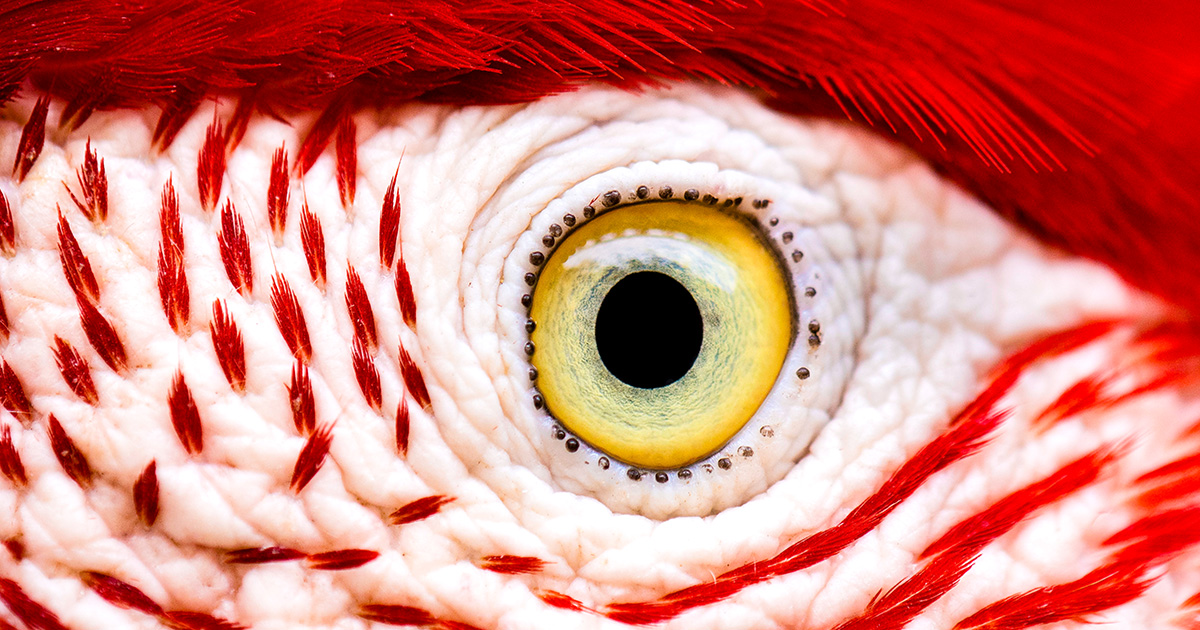
The bird retina is one of the most energetically expensive tissues in the animal kingdom, yet it doesn’t use the energy advantage of oxygen. New research finally explains how this is possible.
Everyone’s DNA keeps mutating. Could correcting those errors lead to longevity?
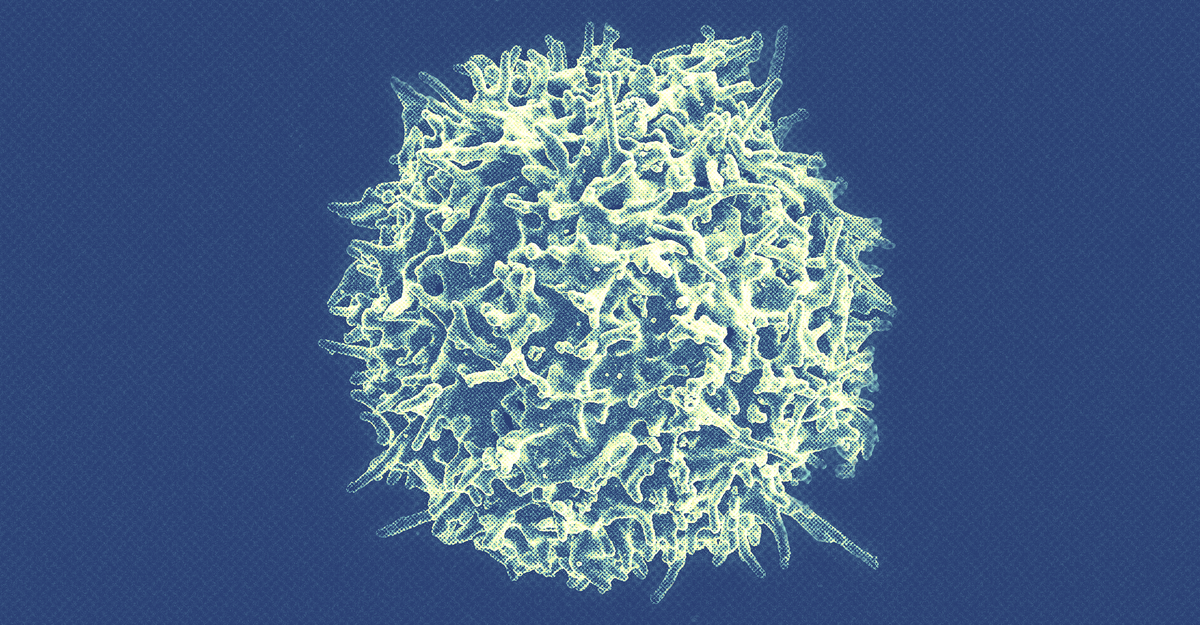
CAR-T cell therapy, originally developed for cancer, is showing ever more promise as a treatment for autoimmune diseases.
Tickling may be evolutionarily ancient and recognized across cultures, but science has only scratched the surface of this topic

The bane of sailors for centuries, scurvy is a disease that has caused immense suffering, even to the present day.
While some bacteriophages play vital roles in laboratory research, others are bent on sabotage.
A step-by-step guide to making de novo binders.
How to “read” nucleic acids, from Sanger to nanopores.
Conservation has traditionally ignored the planet's smallest life forms. Microbiologists are trying to change that — before it's too late. Microbes make life on Earth possible, yet human activity is wiping these microbiomes out — and science is only beginning to grasp the…
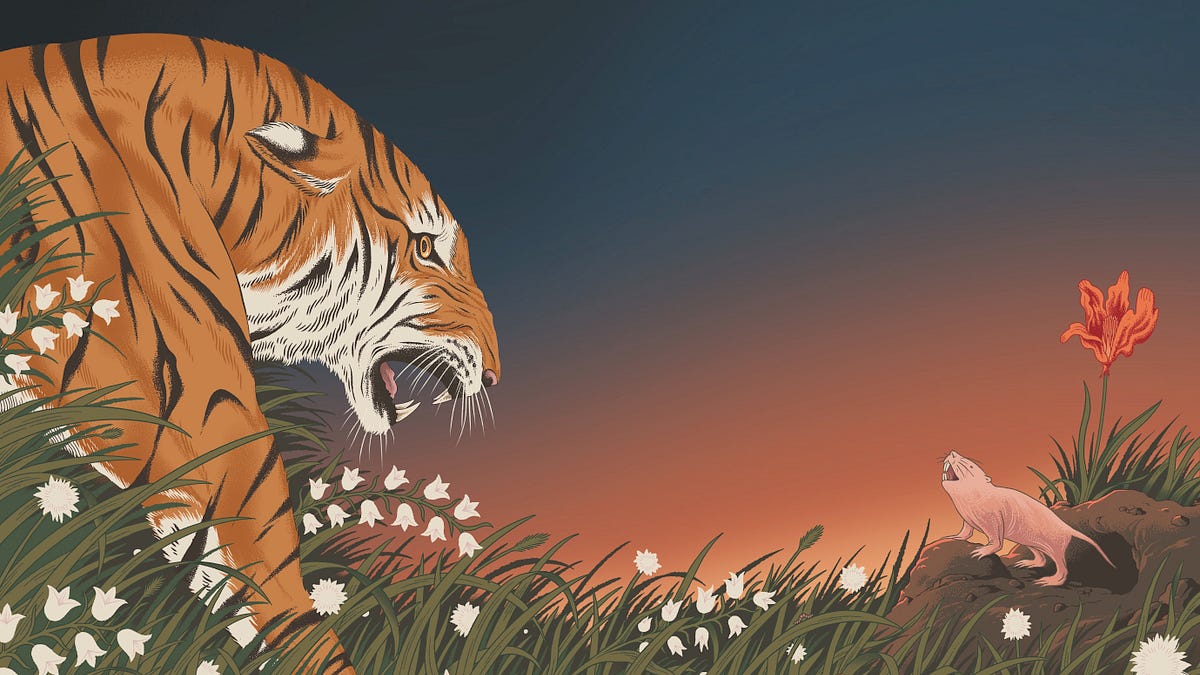
The secrets to extending human lifespans might lie in the animals that can already live for centuries.

Despite their outsize hold on popular imagination, Venus flytraps are native to a tiny corner of the globe: the Coastal Plain of the Carolinas. As development threatens, one town—spurred on by one tireless botanist—has taken up the shovel to save the world’s most fascinating…
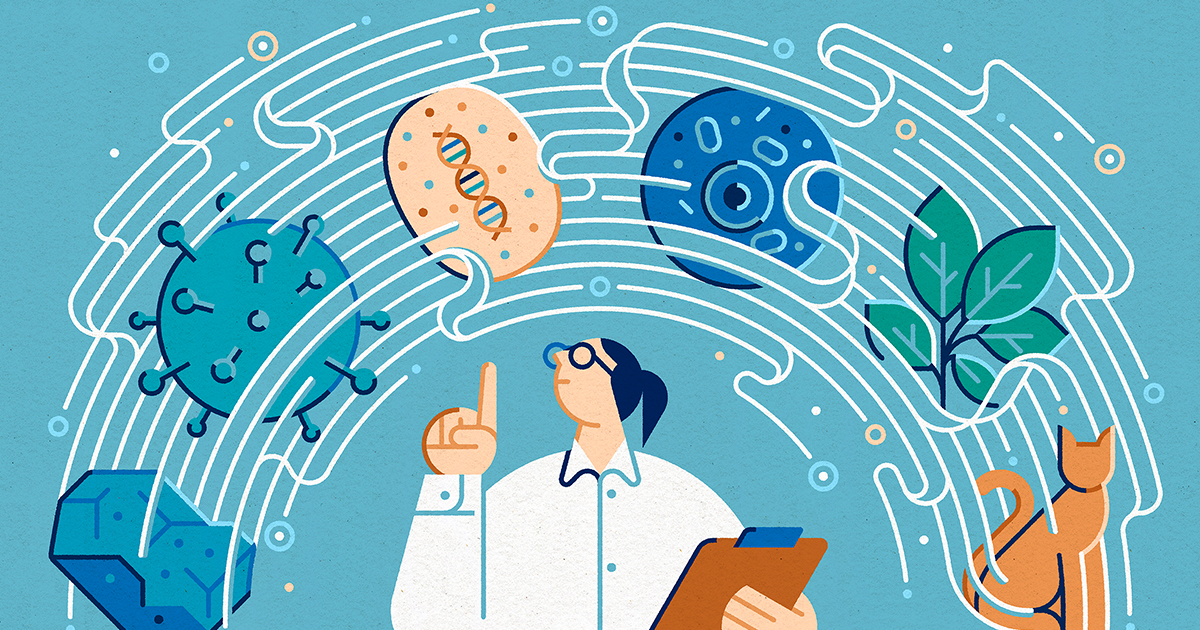
The newly described microbe represents a world of parasitic, intercellular biodiversity only beginning to be revealed by genome sequencing.

How aquaporin and potassium channels filter hundreds of millions of water molecules or ions each second, by positioning the correct amino acid in the perfect place.

It is our biggest blind spot, a bizarre experience that befalls us every day, and can’t be explained by our need for rest


Scientists are searching for the secret in Doug Whitney’s biology that has protected him from dementia, hoping it could lead to ways to treat or prevent Alzheimer’s for many other people.
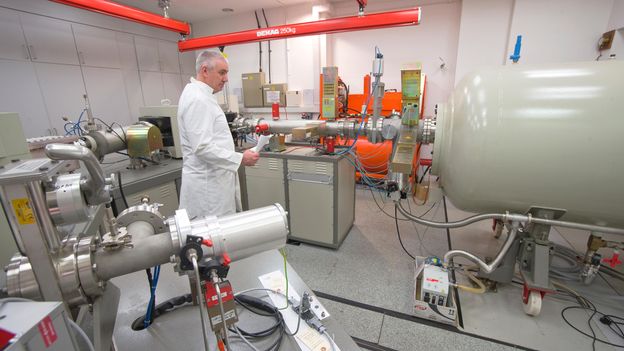
When something dies, a telltale radioactive signal ticks like a natural clock. Discovering it helped us solve all sorts of natural mysteries.

In 4,000 years, cataract surgery went from a crude procedure involving thorn instruments to a 20-minute operation with a 95 percent clinical success rate. The next step is broadening access.
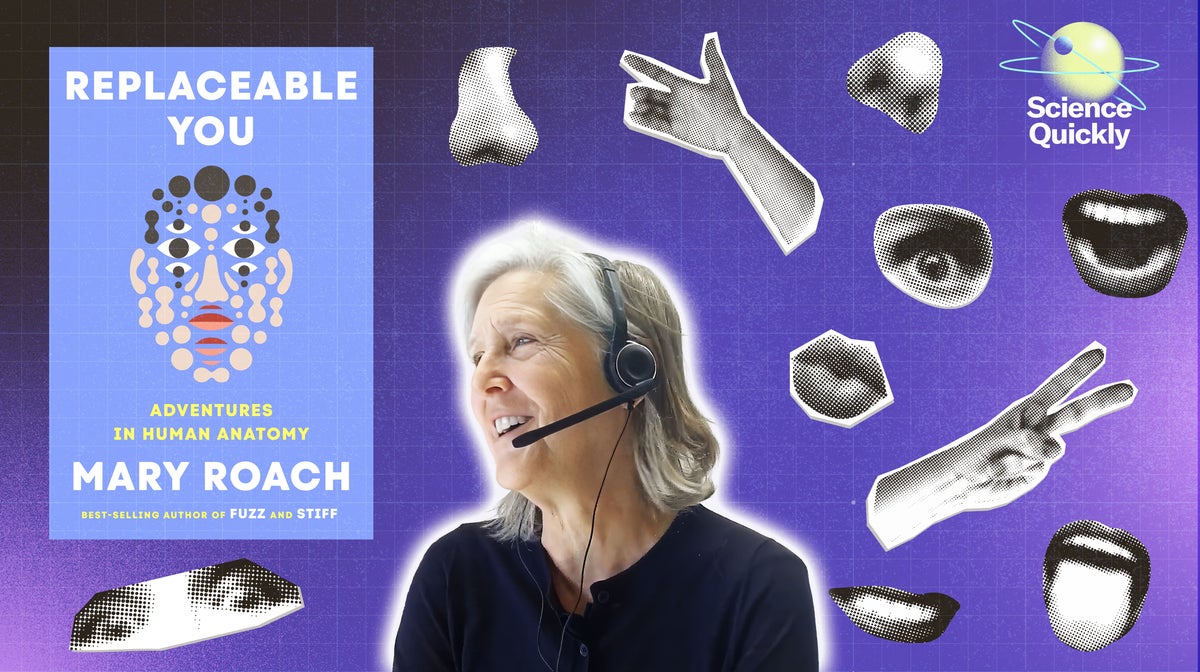
Mary Roach unpacks the millennia-long effort to replace failing body parts—and the reasons that modern medicine still struggles to match the original designs.
You carry literal pieces of your mom—and maybe your grandma, and your siblings, and your aunts and uncles.